Saturday, April 20, 2024

Goan professor at the forefront in organising Future Energy Carriers workshop in Germany


Goan professor at the forefront in organising Future Energy Carriers workshop in Germany


Dr. Levinson J Martins, Managing Director, Goa Waste Management Corporation along Pranay Morajkar, Assistant Professor of Chemistry, Goa University, two delegates from Goa attended the meet in Germany


BY Armstrong Vaz


When like-minded people come together amazing things happen, wrote Goa-born German-based Professor Ravi Xavier Fernandes on his LinkedIn page.


He was referring to the Indo-German Workshop on Future Energy Carriers, a two-day workshop held at Physikalisch-Technische Bundesanstalt (PTB) Braunschweig, Germany recently.


The Indo-German Bilateral Workshop on Future Energy Carriers: Advancing Bio-circular Economy for Clean Energy saw delegates from both India and German deliberate on various topics centered around Future Energy, Circular Economy, Clean Energy and Circular Bioeconomy.


For the unknown Circular Bioeconomy is an economy powered by nature. It is a new economic model that emphasizes the use of renewable natural capital and focuses on minimizing waste, replacing the wide range of non-renewable, fossil-based products currently in use.


“The willingness and motivation to work together through excellent ideas and diverse strengths and expertise made this Indo-German Workshop on Future Energy Carriers a big success,” said Ravi, an alumnus of Chowgule College Margao and Goa university, who traces his roots to Velim village.


The workshop, coordinated by Prof. Ravi Xavier Fernandes, Physikalisch-Technische Bundesanstalt (PTB) Germany and Dr Sanjukta Subudhi, The Energy and Resources Institute (TERI) served as a platform for knowledge exchange, networking, and joint research initiatives between experts from both countries.


PTB, Germany for which Prof Ravi works is the National Metrology Institute of Germany with scientific and technical service tasks. PTB measures with the highest accuracy and reliability – metrology as the core competence. PTB stands for progress and reliability in metrology for the benefit of society, trade and industry, and science.


“Thanks a lot, dear delegates from India and Germany for your very active participation and lively discussions. This was the first of its kind IGSTC (Indo-German Science & Technology Centre) Workshop with Representatives from Academia, Industry, Research Institutions, Government Officials sitting on one table to discuss one of the most important topics on Sustainability. Looking forward to all our future bilateral and multilateral interdisciplinary collaborations,” added Prof Ravi.


The workshop topics included: Biofuel Production Technologies, Green Hydrogen Generation, Circular Economy Approaches, Sustainability and Life Cycle Assessment, Regulation, Codes and Standards, Business Models and Commercialization.


And there was more Goan connect to the workshop with Dr. Levinson J Martins, Managing Director, Goa Waste Management Corporation along with Pranay Morajkar, Assistant Professor of Chemistry, Goa University being the two delegates from Goa who attended the meet in Germany.


Dr. Levinson presentation centered around topic of “Unlocking Clean Energy: Harnessing Biomethanation for A Sustainable Bio-Circular Economy”


He made a strong pitch for Biomethanation as a promising avenue for sustainable energy generation and waste management and which stands at the forefront of sustainable waste-to-energy solutions, offering a pathway towards resource recovery and environmental stewardship.


He also favoured joint research in biomethanation technology.


“There is a need for more research in advancing biomethanation technology, looking forward to the vision for collaboration between India and Germany in advancing biomethanation technology, taking into account the strengths and expertise that each country brings to the table he envisaged the need for joint research in the field,” he said in his presentation.


Levinson also said that research work should center around odour control in biomethanation plants.


“Research interventions with respect to emerging technologies in odour management and integration of solid waste and sewage treatment plant and extraction of Methane gas,” are the other areas which need fine tuning, he said.


Taking a futuristic view of the emerging alternative fuels Levinson made a strong pitch on the need for future collaboration.


“Analysis of the future outlook for bio methanation technology and considering factors such as technological advancements, policy support, and market demand are some of the key areas where the focus of future research,” he said.


He also added that there should be identification of key requirements and challenges for scaling up biomethanation infrastructure, including investment, regulatory frameworks, and public awareness.


“Proposals for collaborative initiatives such as joint research projects, knowledge exchange programs and solutions through advance and cutting-edge technologies for problems faced currently to accelerate the adoption of bio methanation technology on a global scale,” were some steps he suggested in his talk, while urging delegates from Germany to visit Goa and make a field trip to the facilities and have a closer look at working of the solid waste management plants managed by

Goa Waste Management Corporation.


The other delegate from Goa Pranay was delighted that he was part of the brainstorming workshop.


His presentation centered around sustainability and climate change and the use of Nanomaterials to reduce carbon footprint.


“My presentation was about using Nanomaterials derived from waste to produce biofuels which can then be used to improve combustion efficiency and reduce pollutant emissions. I also presented how Catalytically CO2 can be converted to industrially important platform chemicals, to address global warming and climate change,” said the Goa University professor.


“This was one of the best bilateral research meetings that I attended. Intense and enlightening research discussions among some of the best Indo-German research groups. I am glad that I could attend and contribute to the success of this meet, even in a small way,” Pranay said.


“Hats off to Prof Ravi Xavier Fernandes, Sumit Agarwal and TERI and IGSTC for creating an excellent platform, successful coordination and organization,” he added. 


Labels: , , , ,

Wednesday, August 8, 2018

Dr Shekar Salkar's 'stunning tests' add to more confusion over fish Formalin,


The FDA appears not be serious in testing the fish for the deadly chemical. In the absence of a fool proof method the impression that corruption prevails gathers added momentum.

DR Shekar Salkar, practicing  oncologist  has raised serious doubts on the ‘Screening tests’ conducted by FDA, here goes his video and the tests conducted by him on the local and from fish coming to the state from outside Goa.
The results are stunning by his own admission.

Please don't try to gloss over serious health issue. It is better to see on the side of caution and not be blinded with political affiliations. Truth shall and must prevail at all times.

So it means that the FDA tests at the Goa border posts are of no significance, if one goes by Salkar’s assertions.

So it means that the confirmatory test are only foolproof and rest are just eyewash.

Dr Shekhar Salkar statement

Recently we had the misfortune of our beloved fish being taken away from our plates. All thanks to the detection of formaldehyde in a Screening test conducted on site by FDA Officials which turned out positive. A confirmatory test in the FDA Laboratory later on the same day showed the formaldehyde content of the samples to be below the detectable limit of 4 parts per million and safe for human consumption. The hurried declaration of the ‘SCREENING’ Test and Hyperbole in public debate has caused much confusion and threatens many livelihoods and indeed our very way of life in Goa.

In Medical parlance doctors are aware of Screening tests and Confirmation tests done for each disease. Doctors do not rush to declare the Diagnosis without having both test results in hand for fear of causing more harm than good.

The Screening test is designed to detect maximum possible cases and does repost quite a few FALSE POSITIVES. These are then weeded out by Confirmatory tests.

In the instant controversy the Screening test was reported positive and RESULT revealed to the public rather than wait for the Confirmatory test. This has set in motion a huge debate and eroded the faith of the public.

Being a man of science I decided to conduct an experiment using the same Reagent as used in the Screening test by FDA on FRESH Catch fish from Caranzalem. The results are stunning. Please see for yourself and decide

People’s reaction on social media
How will Dr Shekar Salkar explain that formaldehyde in fish was within permissible limits if the confirmatory test was false positive. Such an observation was also made by Ibrahim to prudent when the FDA conducted the test.  May be Dr Salkar can throw light on the same as well as clarify within permissible limits in case of formaldehyde since he is an expert on cancer. Looking forward to be educated.

“This is a request to Dr Salkar to request to provide a way out to test the fish coming from outside Goa. What confirmatory test should be done in such a situation? Or else it means we succumb to the pressure of Ibrahim who is politically well connected with all politicians thus making people susceptible to cancer. Dr Salkar has a responsibility to provide a quick solution much more so as he well connected with the ruling dispensation,” says Jovito Lopes, a former Red Cross of India volunteer, a retired teacher and Journalist.

Does it mean that the FDA tests at the Goa border posts are of no significance? Does it mean that the confirmatory test has to be done? This is in line with Ibrahim's contention.  Only Dr Salkar will be able to explain this since the tests at the border are screening tests. i don't know if this screening if mine is also false positive. What I know and Dr Salkar will admit is that overall cancer cases are on the rise. What preventive measures have been in place should be made known by Dr Salkar because preventive medicine is not at all lucrative. What pays today is curative - promoted by the drug industry to corporate hospitals.
Goans have been supplied this kind of fish for the past six years as can be seen from the photograph of them Fisheries Minister Avertano with Ibrahim and then ministers and party leader. The mastermind is very well connected with the political class. Please don't try to gloss over serious health issue. It is better to see on the side of caution and not be blinded with political affiliations. Truth shall and must prevail at all times.

Labels: , , ,

Tuesday, April 14, 2015

Broomwork needed at Cuncolim Municipality

A junk vehicle of Cuncolim Municipal Council waiting permission to be sent to the scrapyard.

 A junk vehicle of Cuncolim Municipal Council waiting permission to be sent to the scrapyard.
 Citizens charter
 Landry Mascarenhas chamber, chairperson of Cuncolim Municipal Council
 Premanand Velip Alias Ballikar
 Chris, an employee of CMC, no identification tag
 Vehicles of Cuncolim Municipal Council parked next to the historic Martyrs Chapel

 Vehicles of Cuncolim Municipal Council parked next to the historic Martyrs Chapel
Vehicles of Cuncolim Municipal Council parked next to the historic Martyrs Chapel

 Vehicles of Cuncolim Municipal Council parked next to the historic Martyrs Chapel

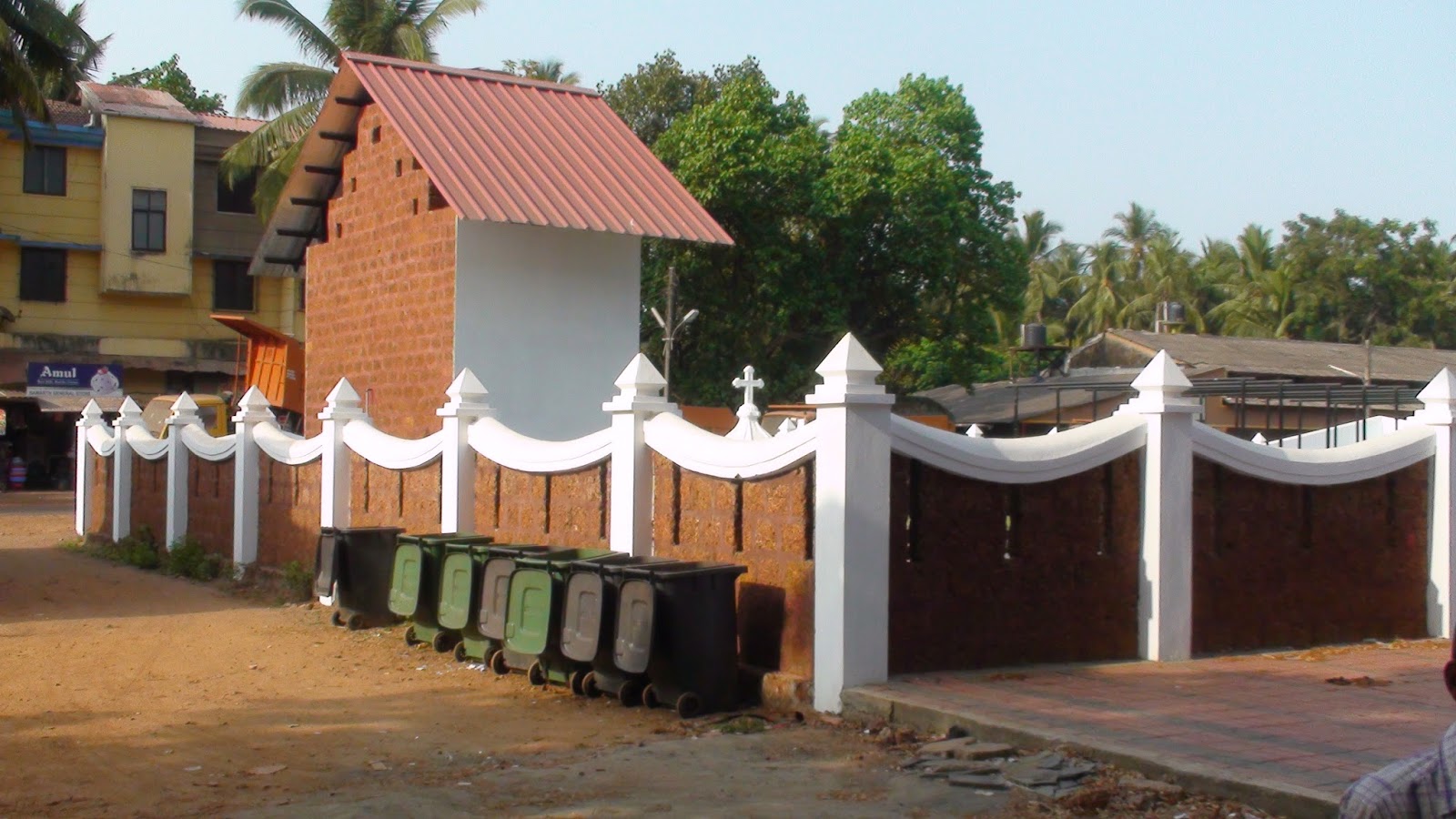
 Park for children or garbage dumping dump?
 Garbage bins outside the chieftains memorial
  The side view of historic martyrs Chapel Cuncolim
  The side view of historic martyrs Chapel Cuncolim
  The side view of historic martyrs Chapel Cuncolim
 Vehicles of Cuncolim Municipal Council parked next to the historic Martyrs Chapel
 A cycle meant for collection of garbage lying at the entrance of Cuncolim Municpal Library behind CMC building.
  The entrance of Cuncolim Municpal Library behind CMC building.
 The side view of historic martyrs Chapel Cuncolim
 Garbage behind Cuncolim municipal council building
 A view of historic martyrs Chapel Cuncolim
  A view of historic martyrs Chapel Cuncolim
  A view of historic martyrs Chapel Cuncolim


Labels: , , , , ,

Wednesday, August 13, 2014

Conservation architect Mumbai

Conservation architect Abha Narain Lambah has been battling to save historic buildings in Mumbai for the past 12 years. She has restored many old structures to their former dignity, among them Mahatma Gandhi's former home and the JJ School of Arts, and managed to clean up entire downtown precincts, like the famous Heritage Mile. In August this year she won two Unesco awards for cultural conservation. Here, she describes what it's like to be one of the few advocates of antiquity in a fast-developing city
Thursday December 6th 2007


When I first became a conservation architect, in 1995, most Indians had absolutely no idea what conservation was. At parties, when I introduced myself, people would ask: "Are you a conversation architect?" But in the last decade awareness has grown. A lot of my work has been fundraising and activism. 
 
I moved to Mumbai in 1995, a significant time for conservation; the Bombay Heritage Regulations were introduced in that year. Before that there were only a few protected structures – mostly monuments. Everything else was up for grabs. You could have demolished the Gateway of India or Victoria Terminus without anyone objecting. Now the government has to consult a heritage committee before it goes ahead with projects that affect protected buildings. 
 
The first independent project I was involved in was Dadabhai Naurojee Road, now known as the Heritage Mile, in 1997. This road, which runs between the famous Victoria Terminus and Crawford Market, encapsulated all the problems of conservation in Mumbai. It was (and is) a highly commercial and crowded area, with deteriorating facades, buildings protected by the Rent Control Act and ugly shop signs that obscured the beautiful gothic and Victorian architecture. 

When I began I was amazed to find that the Brihanmumbai Muncipal Corporation (BMC), the civic body that governs the city of Mumbai, had no maps or photos of the buildings. Most of the buildings in the area weren't even listed as heritage structures, which meant they could have been demolished without objection. I thought that if I could clean up this road, I could clean up anything in Mumbai. 
 
I went to every shop and establishment along the road and suggested ways in which they could move or reduce the size of their signs. I had to make a complete nuisance of myself, and my friends thought I was mad. I remember visiting McDonald’s several times to nag them about the size of their sign. 

Finally, a bank decided to relocate its sign, and the others followed suit. Then the Mumbai High Court ordered billboards in the area to be removed, which made a huge difference. It's been seven years now since the shopkeepers and other establishments formed the Heritage Mile Association, which helps maintain the area. They have paid for cast-iron benches, signs, paving and street lamps in front of their own establishments. Every shopkeeper has a stake in the area. To me, that makes perfect sense. 
 
One of the best things to happen in the last decade is that the government has given up its monopoly over conservation, and now allows citizens' groups to be involved. Corporations like HSBC and Deutsche Bank are helping to renovate their own historical headquarters. 
 
My biggest challenge is the lack of awareness. I remember some bureaucrats asking me: "Why restore buildings in lime when it's so laborious? Why can't we just do it in cement, which will last longer anyway?" When I restored Mani Bhavan, the former home of Mahatma Gandhi, I saw that all the original ceramic tiles had been replaced by ordinary bathroom tiles. A lot of people think that if the buildings have survived so far, they can continue to survive without special care. 

Apart from the lack of awareness, the lack of funds is crippling. Whenever heritage and economics clash it's economics that wins. Many heritage areas are likely to disappear in a few years because the owners can't afford to maintain them. They would rather sell to builders, who can pay them huge sums, and buy a convenient flat in a high-rise. 

What’s needed is strong political will, which is completely absent. The Mumbai government, like in most Indian cities, is under huge pressure to redevelop because of the booming price of real estate. The Heritage Committee, on which I served for three years, is an advisory body and has no teeth. It needs to have powers that can't be overruled, and it needs to be able to give financial incentives, which at the moment it can't. 
 
It was a surprise to win not just one but two Unesco awards for conservation. I can't take credit for the first award – for restoring the 15th-century Maitreya temple in Ladakh – because that was entirely due to the effort put in by the villagers of Basgo. We were at a height of 11,000 feet and had to work in the freezing cold, with no telephone lines or electricity. We could only work between May and September because the roads were blocked in the winter. I don't think any other project will ever be so satisfying, especially because this temple was on a global list of endangered buildings in 2002. 
 
The second award was for restoring the hall of the Mumbai University building, which hadn't been touched for 132 years. We had to put in new electrics and stained glass, and repair the roof and stonework. We found asbestos fibre in the ceiling, put there to improve the acoustics. For over 60 years the students had been breathing it in. 
 
As a nation, India has an abundance of heritage structures, but we take them for granted. People spit and litter in them, cover them with graffiti and tear them down indiscriminately. We need to teach our children how to respect our heritage. 
 
A lot of people think that conservation architects are too sentimental about preserving old buildings, but I believe heritage is Mumbai's unique selling point. I’m not saying that the city should shy from development, just that there is no need to trample on its history in the process. People keep talking about turning Mumbai into another Singapore. I think we should turn it back into Bombay.
 

Labels: , , ,

Heritage Tourism course in Goa

Presentation and justification of the course
Objectives
Methodology
Student profile
Course structure and timing
Programme
Select Bibliography – Heritage Management
Select Bibliography - Goa

 
Presentation, justification and policy statement

Tourism, with around two hundred million workers, is the world’s largest industry. In the second half of the twentieth century it became the main economic driver for socio-economic development all over the planet, a tendency which, coupled with the revolution in transport, I.T. and the leisure industry, has steadily increased. Although tourism is primarily an economic activity, and as such is vital for local and social development, its repercussions go way beyond economics and affect also culture, education and even the very identity and spatial planning of an area.  

India, in spite of having, perhaps, the richest, heritage, both natural and built, resources in the world, has never really successfully promoted its tourist industry and does not have the expertise or training to develop heritage (cultural) tourism, structure the industry and create a coherent sustainable, quality product, which differentiates its industry from competitors in the market. This differentiation comes from professional heritage management. 

Heritage management is the term used to describe the value-addition (‘commodification’) processes involved in turning an intangible resource, such as identity or heritage, into a quality product and effective tool for creating wealth and wellbeing. It leads to an improvement in conservation of the resource, involvement of the local population, and an unleashing of its economic, educational and cultural potential. The benefits of professional heritage management are in the integration of the development of services and infra-structure both for the local population and in the visitor having a great experience. Good heritage management is not really a question of bringing the past back to life, but rather of engaging the public in the present. 

In order to achieve this we must train, at university level, local teams of professional heritage managers who are capable of becoming true agents of change and implementing indigenous models of HERS (Heritage Economic Regeneration Schemes) Master Plans in their own villages and towns. Only then will it be possible to implement a totally revamped GTP 2001 (Goa Tourism Plan), with a special emphasis on Heritage, Eco and Hinterland (Rural) Tourism, along with other policies measures for Goa to become a model and Centre of Excellence in adopting a Green Economy and developing a Knowledge Society, as proposed in the Government of Goa Economic Survey 2005 and, more recently, the Goa 2035 Vision document.

At Fantastic Strategic Planning Pvt. Ltd. we have the expertise, experience and contacts for Chowgule College of Arts and Science to launch a first, ground-breaking, Goan Post-Graduate Heritage Management Course, with external assessment from the University of Lincoln, UK. We can combine our synergies so that the Government of Goa will benefit from the best input the UK and Spain can provide in developing the new, exciting, socio-economic growth sector of heritage management. The idea is to upstream the model in producing a Goan, then Indian, Institute of Heritage Management.

Back to top
 

2. Objectives

2.1 To launch an initial postgraduate, vocational training course in heritage management and aligned fields such as museology, in order to train a first generation of Indian professionals in fields which range from general theory of heritage to practice and implementation of innovative projects in Goa, the rest of the country, and abroad,  using cutting edge teaching techniques.

2.2 To promote innovative, rational, endogenous, sustainable models of heritage management to open-up new avenues for the socio-economic development of the knowledge society.

2.3 To provide a new range of job opportunities for our young graduates and re-training, or life-long learning opportunities, for professionals within Government Departments, Tourism and other businesses.

2.4 To create a model for heritage management which can be used in other parts of India and exported to other developing countries.

To be the launching pad for the Goa, India, Asia Institute of Heritage Management.


Back to top

3. Methodology

3.1 The class will be treated as a ‘learning community’, with the focus on student-centred, accelerated learning. The faculty, under the guidance of David Escott, Course Director, and Alfonso Roura, Course Coordinator, will be facilitators of knowledge acquisition and implementation rather than mere information pumps for rote learning.

3.2       The course will be both on the theoretical level and, in parallel, tutorials for project work. Projects will be based on students’ ideas for HERS in their own town and villages in Goa. 

3.3 Assessment will be externally monitored and validated by the University of Lincoln, UK. The granting of the diploma will depend on the standard of project work. 

The Internet will be a major resource for assignments and project work, along with tutorial visits to natural and built heritage sites and museums around Goa. Teachers and tutors, the main resource people, will be drawn from local specialists (history, archaeology, architecture, oceanography, legislation). 

Back to top
 
4. Student profile

The course is directed at post-graduate students, teachers and other workers of both sexes who have graduated in humanities (languages, education, psychology, journalism, history, tourism, sociology, anthropology and management), science and technology (especially IT and architecture) and workers in the Tourist Department. Applicants will gain points if they own a laptop, have home access to the Internet and a working knowledge of Microsoft Office (especially WORD, POWER POINT and EXCEL). They should also have excellent communicative skills and a high level of competence in English. They will be assessed on their networking and team work capabilities. Translation skills into Konkani and from Portuguese are also a plus.    

Back to top

5. Course structure and timings

Duration: 500 hours over 1 year

5.2 When:

5.3 Timings:

5.4 Where: Chowgule of College of Arts and Science

5.5 Structure: 2 modules, one theoretical (150 hours on heritage theory and issues, in yellow) and the other practical (250 hours in tutorials and in the field, for the design of viable projects)

6. Programme

Red = Proposed local lecturers,  Black = David Escott or Alfonso Roura,  Blue = International

6.1 General theory

6.1.1 Cultural and experience industries in the 21st century

6.1.2 Heritage:

Concepts and issues
Uses
The social dimension: stakeholders, service providers and the local population
Heritage,  identity and dissonance (e.g. colonialism)
 

Local, national and international heritage
Heritage as the basis for cultural tourism
Legislation (Local)
Conservation of heritage (Local)

6.1.3 Heritage and Economic Regeneration (HERS) (DE)

6.1.3.1 Heritage as tool for the creation of value, wealth and wellbeing
6.1.3.2 Direct, Indirect and Induced Benefits
6.1.3.3 Heritage and sustainable development
6.1.3.4 Multi-source financing of heritage
6.1.3.5 Accounting for intangible assets


6.1.4 Heritage Management

6.1.4.1 Evolution of the concept of heritage management
6.1.4.2 Different management models: English Heritage (Private Sector driven versus the French model (Public Sector Driven)
6.1.4.3 The role of heritage in developing countries 
6.1.4.4 Heritage Management and spatial planning (the new Regional Plan Goa)

6.1.5 Concept and evolution of Heritage/Cultural Tourism (Intl)

6.1.5.1 Heritage Tourism Management
6.1.5.2 Managing stakeholders’ issues
6.1.5.3 Ownership issues

6.1.6 Links between Heritage Tourism and: (Intl)

6.1.6.1 Eco Tourism
6.1.6.2 Creative Tourism 


6.2 The Heritage Manager as:

6.2.1 A manufacturer of experiences (AR)

An agent for change and socio-economic development

An educator

A conservationist (Local)

6.2.5 An expert in marketing (Local)


6.3 Strategic Planning for Goa: from heritage resource to product

Analysis and diagnosis a region’s heritage

General lines of analysis of heritage and services
Techniques for categorising, documenting, cataloguing and filing: the resource record
Benchmarking heritage projects

Goa: history, heritage, identity and fusion

History 1: Pre-Portuguese Period
History 2: Goa as capital of ‘A India Portuguesa’
History 3: Post Liberation: the challenge of integration into India and opportunities as a model for harmonious development
Goan Houses
Goan Churches
Goan Temples
Goa’s Wild Life Sanctuaries
Goa’s folklore and cuisine
The Portuguese Civil Code: the common model to replace Personal Civil Law in India?

Project design and management

Processes
Setting up a project
Team work and networking
Communication techniques
Indicators and evaluation techniques


Interpretation 

Concept and history of heritage interpretation
Target audiences and market segmentation
Interpretation models
In situ interpretation
Interpretation media
Museology: basic principles
6.3.3.7 Heritage exhibition techniques 


Marketing and promotion


IT integration

How the Internet works
Back versus Front End functions 
Server-based heritage site management
Data base filing and retrieval
Interactive, multi-media interpretation tools
eMarketing
Global Distribution Systems for the Tourist Industry
eCommerce
Social networking
 
Heritage and learning

The Education Sector as the main heritage stakeholder
Heritage as a classroom
Material design for school visits

Heritage conservation

Policies and institutions for conservation
Conservation techniques

Multi-source financing

Local, national and international grants
Private sector sponsorship
      

Back to top


Company Profile


We are a KPO (Knowledge Processing Organization), Social Enterprise, dedicated to the management of change in the socio-economic development of a Knowledge Society and Green/Clean Economy. Fantastic Strategic Planning Pvt Ltd is our operating company here in Goa. We can leverage the necessary knowledge, financing and technology, and offer the  Government consultancy, strategic planning and benchmarking for policy definition, along with coordination and effective, sustainable implementation programmes, training and capacity building, with full ICT integration, for Goa to become an eHub, benchmark and Centre of Excellence in the following strategic sectors and drivers:

• Tourism: the economic driver, with heritage management the spatial planning driver
• Education: the knowledge and social driver
• English as a Second/Foreign Language: the medium of communication, along with ICT-based materials and teacher training for other languages
• Waste and Water Management: a basic necessity
• Renewable Energy: clean energy source for offsetting carbon emissions and fossil fuel dependency

The eInfrastructure is already in place with the Goa Broadband expert network. Through the re-launch of our Software Factory and Back-end Office (formerly registered with STPI, the Software Technology Parks of India), we can provide the key enablers for these drivers in a Fantastic eGoa Programme covering:

• eBusiness
• eLearning
• eHealth
• eIndicators and benchmarking
• eGovernance

Tourism 

Our proposed starting point is to revamp the GTP (Goa Tourism Policy), which was drawn up in 2001 and due to be revamped last year. It is frankly a pathetic document, with the department still in the dark ages when it comes to regulation, ICT, digitalization, creation of new products, branding, marketing and most importantly, what should be its core activity: information providing. Goa does not have the experience or training to develop Cultural and Heritage Tourism (an objective set by the Government of Goa in its Financial Report 2006), Hinterland or Eco Tourism. There is no structure or proper promotion of the industry. 


The department does not have its own line of design or promotions tools. Poorly designed brochures are made by different empanelled agencies for different Road Shows. Marketing outlay on 3 Road Shows last year in the US was a whopping 1.35 crores, with the outcome of three couples thinking of holding their weddings in Goa. There is no proper evaluation, marketing audit or follow-up activities. The department’s website is very badly designed and is not linked in to any on-line booking facilities. There were hardly any buyers at the two Goa Tourism Meets held to date and there was no delegation at this year’s FITUR (the second largest tourism fair in the world after Berlin) in Madrid, Spain. Kerala Tourism won the prize for best International Stand last year.

The main area for capacity building is effective heritage management. Goa, and India, has the resources, but not the expertise for managing and ‘commodifying’ them, so that they become quality tourism products and unleash their value addition and educational potential, so enhancing the local population’s pride in their heritage and identity, the two differentiating factors of a local tourism industry. ‘Commodification’ is the term used for the conversion of heritage resources into a successful tourism and educational product, and an effective tool for creating wealth, value and wellbeing. This is a basic process in building a knowledge economy, where the emphasis moves away from tangibles, like immovable property, towards intangibles such as knowledge and wisdom.

The economic benefits arising from successful commodification are usually classified as:

• Direct: from sales of entry tickets, services, publishing and image rights
• Indirect: accommodation, souvenirs, restaurants, transport
• Induced: creation of infra-structure, employment opportunities arising from increased demand for service providers


The people of Goa, at the moment, are obsessed with the negative impacts of tourism, as its development has been separated from local needs and social services. We have designed a strategic framework, called HERS (Heritage Economic Regeneration Scheme), as an adaptation programme to a Green/Clean Economy and GDP, with CDM (Clean Development Mechanism) indicators, in line with the Kyoto Protocol, and Tourism Department’s drive for Heritage, Eco and Hinterland Tourism. 

Education

Capacity building and training for HERS will be done through our:

• Post-graduate Heritage Management Course, so that a first group of talented, enthusiastic young Goans can be at the centre of regenerating their towns and villages. The course is based on the first EU funded course held in Barcelona in 1991, attended by our Heritage Manager, Alfonso Roura. We can provide the outside expertise to facilitate Goa, and then up-streaming to the rest of India, coming up with its own model for HERS. We are considering external assessment through the University of Lincolnshire in the UK. Our Post-graduate Heritage Management Course will be a platform to launch:


• Goan/Indian Institute of Heritage Management, with three departments:

1) The Training Department
2) The Business Centre for Project Development
3) The Research Department
 
Objectives of the Institute:

a) To launch a basic postgraduate, vocational training course in heritage management and aligned fields such as museology, in order to train a first generation of Indian professionals in fields which range from general theory of heritage to practice and implementation of innovative projects in Goa, the rest of the country, and abroad,  using cutting edge teaching techniques.

b) To promote innovative, rational, endogenous, sustainable models of heritage management to open-up new avenues for the socio-economic development of the knowledge society.

c) To provide a new range of job opportunities for our young graduates and re-training, or life-long learning opportunities, for professionals within Government Departments, Tourism and other businesses.

d) To create a model for heritage management which can be used in other parts of India and exported to other developing countries.

• Heritage Data Base: the listing of heritage is the first stage of its management. The HDB project is an exciting initiative to eventually to have full information on India’s heritage online in order to reach a general public and promote interest in Indian culture, architecture and art.

Macaulay’s Minute on Education in India set a trend for inclusive education, with English as the MOI as a uniting element in the multi-cultural subcontinent. It was part of his three L’s: Language, Law and Liberal Democracy, with an empire that would end dissolving itself and become a free-trade area. His ‘trickle down’ effect though did not happen for various reasons, one of which was that he did not have Internet for distribution! More recently, Sam Pitroda’s NKC (National Knowledge Commission) did not find an implementation agency for his recommendations for building an Indian Knowledge Society and there are numerous challenges in applying the RTE 2009 (Right to Education Act). 


To go ahead we need clearance from the Government of Goa. If totally satisfied with the new GTP, we propose the formation of a Special Vehicle in the form of a PSPP (Public Social Private Partnership) to work with the government as an interface to facilitate total transparency,  efficient delivery and public involvement in SMART (Specific, Measurable, Achievable, Relevant, Timely/Time-bound) Master Strategic Plans in the other areas.

Labels: , ,